If your garden came through the summer with brown gaps in the hedge, or borders where plants simply gave up, you are far from alone. The good news is that the next few months are the best time of year to put it right.
Bare root plants are grown in open ground and lifted while they are dormant, with the soil shaken from their roots. They are the traditional way to plant longer hedges and native mixes, and they establish well when planted in the right season.
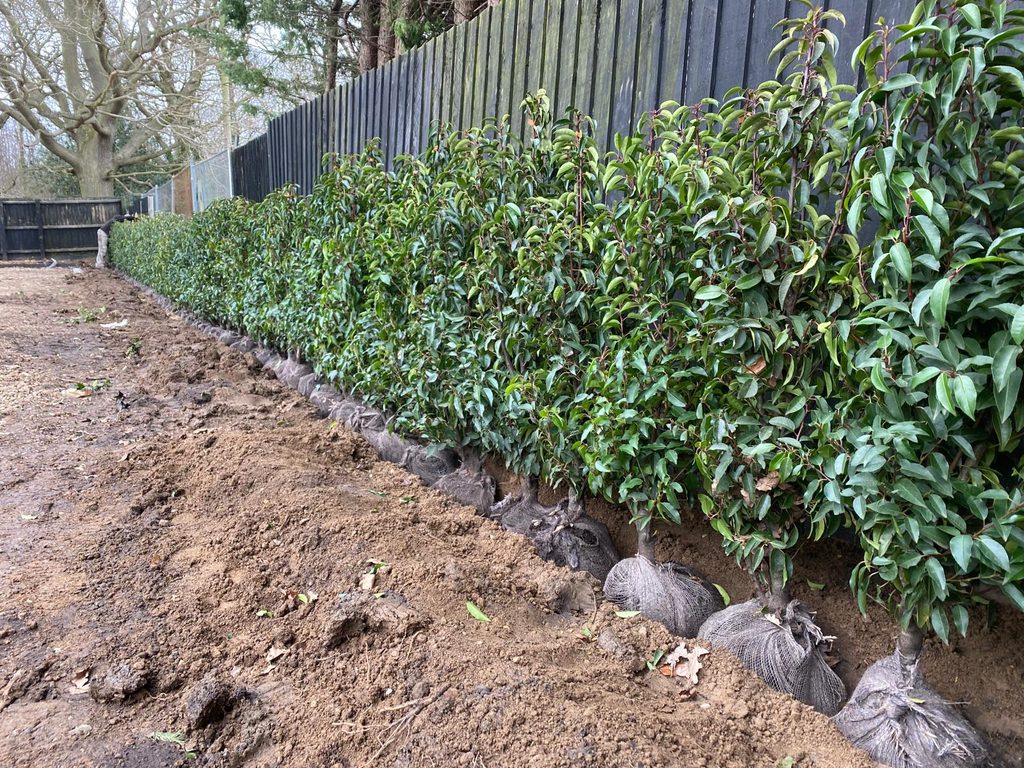
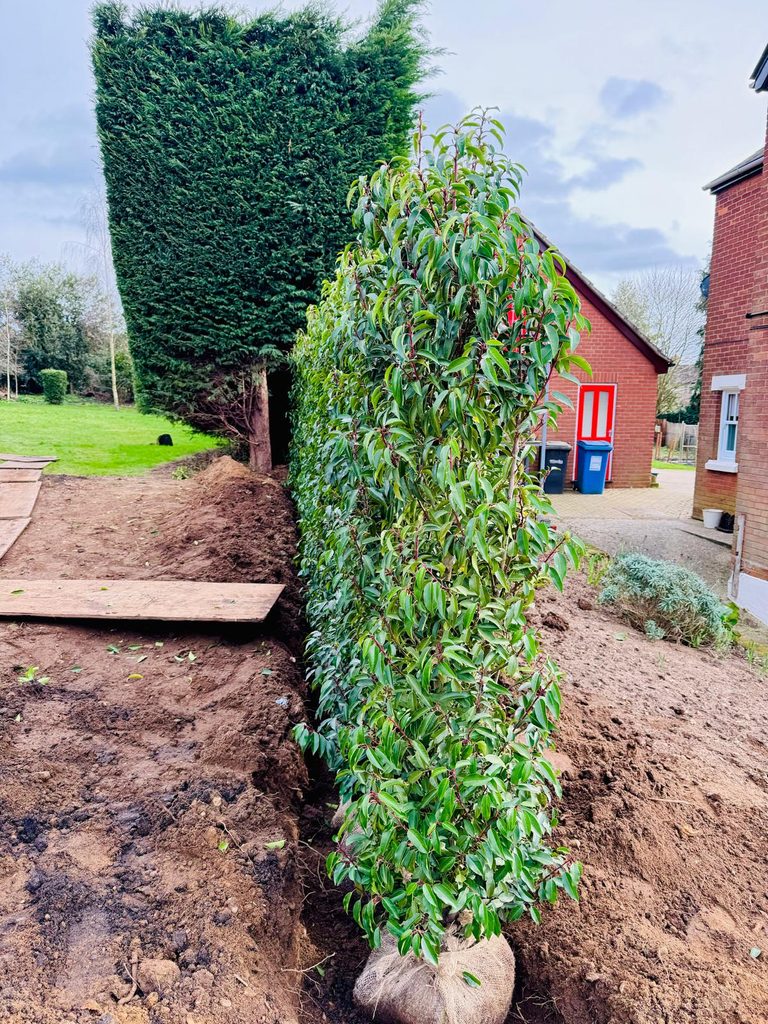
Root ball plants are also field grown, but lifted with a ball of soil around the roots, held in hessian or netting. They suit larger evergreen hedging such as laurel, where you want height and screening from the day they are planted.
Bare root and root ball plants are planted while dormant, and our root ball planting season runs from November to March. Planting in this window means the roots settle into cool, moist soil over winter, ready to grow away in spring. After this summer, that head start matters. Plants that go in now will be far better prepared for a dry spell next year than plants that go in late.
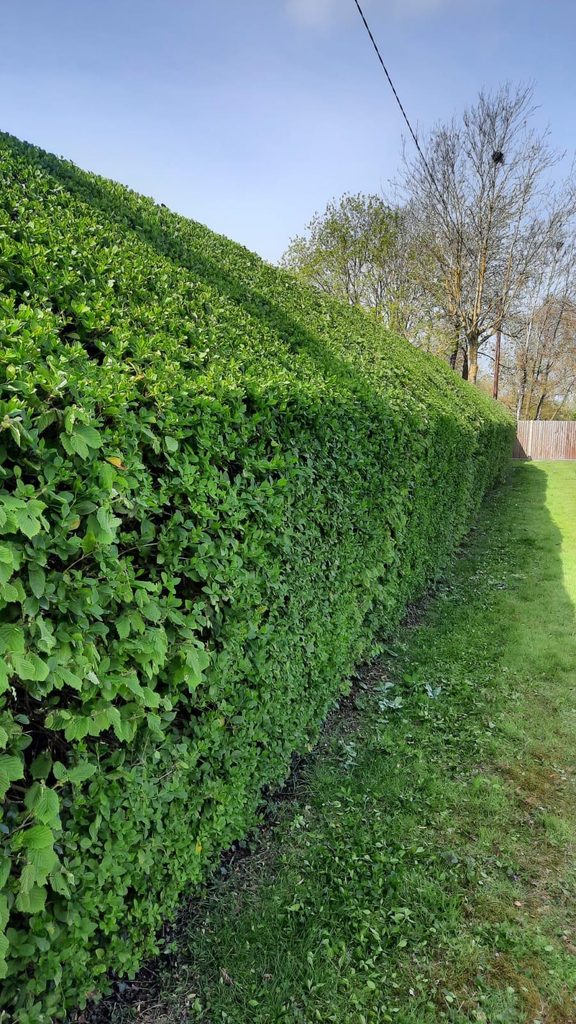
Where a section of hedge has died, we remove the dead plants and their roots, improve the soil and plant matching replacements. For gardens that need privacy back quickly, root ball Portuguese laurel, cherry laurel or Griselinia can be planted at a good height, with Portuguese laurel available up to 180 to 200cm. For a longer boundary or a more natural look, bare root hedging is usually the more economical choice, and hornbeam is one of the hedges we plant most. It is native, copes well with heavier soils and often keeps its brown leaves through winter, so it still gives some privacy when other deciduous hedges are bare. We also trim and maintain established hedges, so the new planting can be kept in shape once it is in.
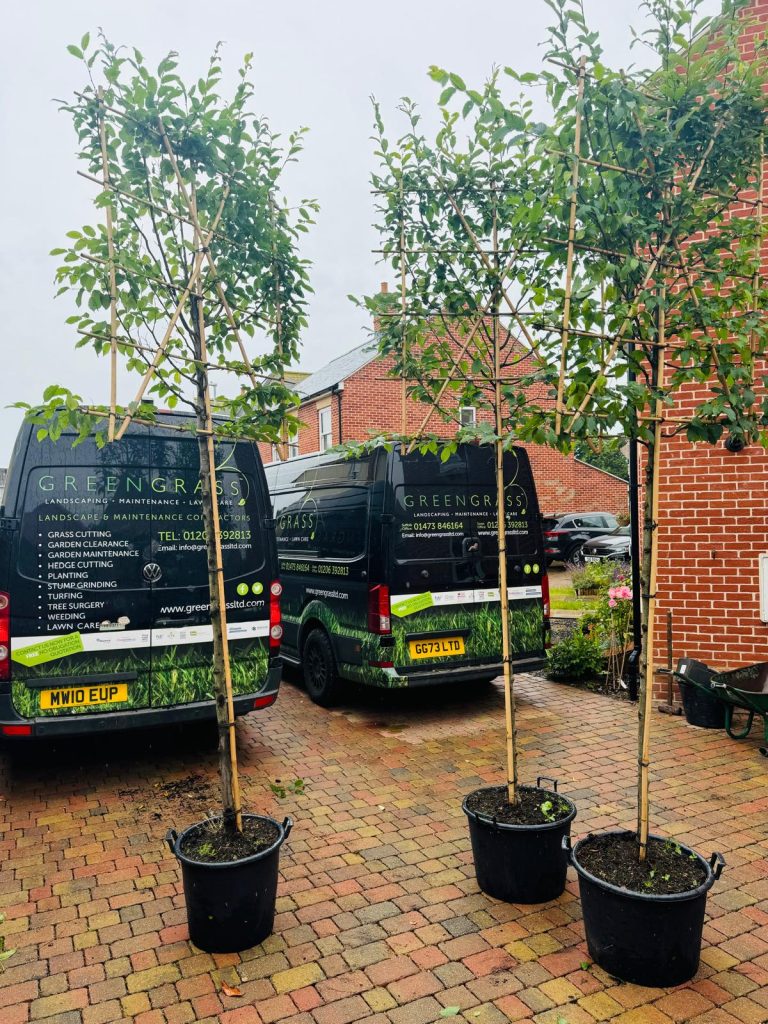
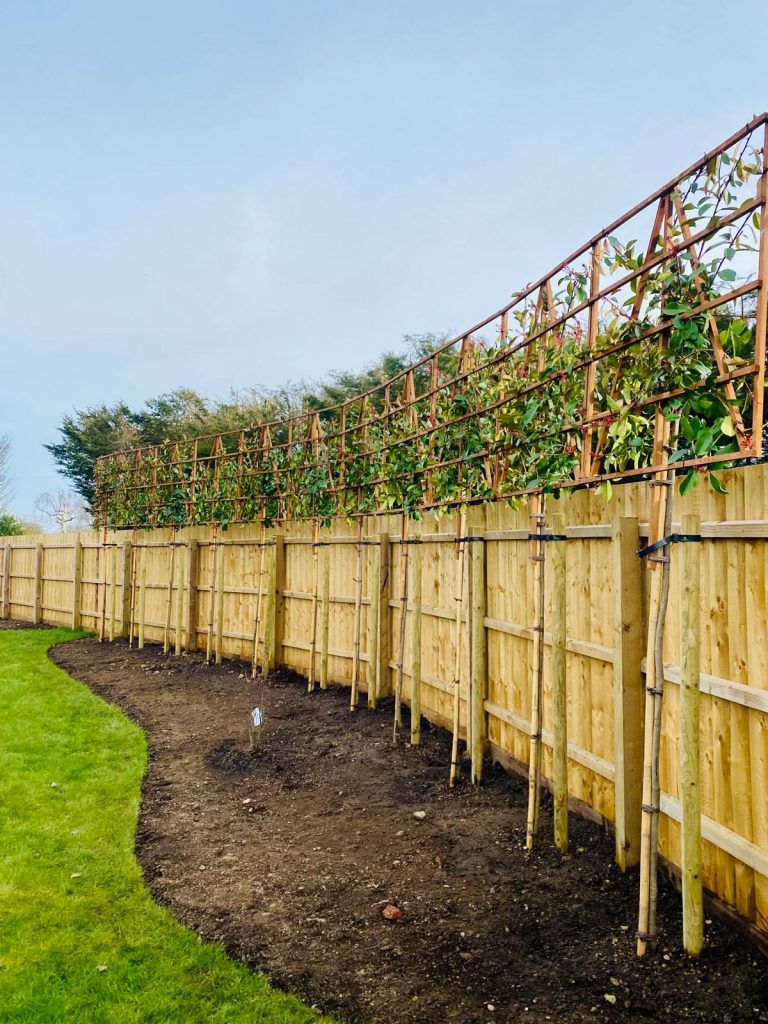
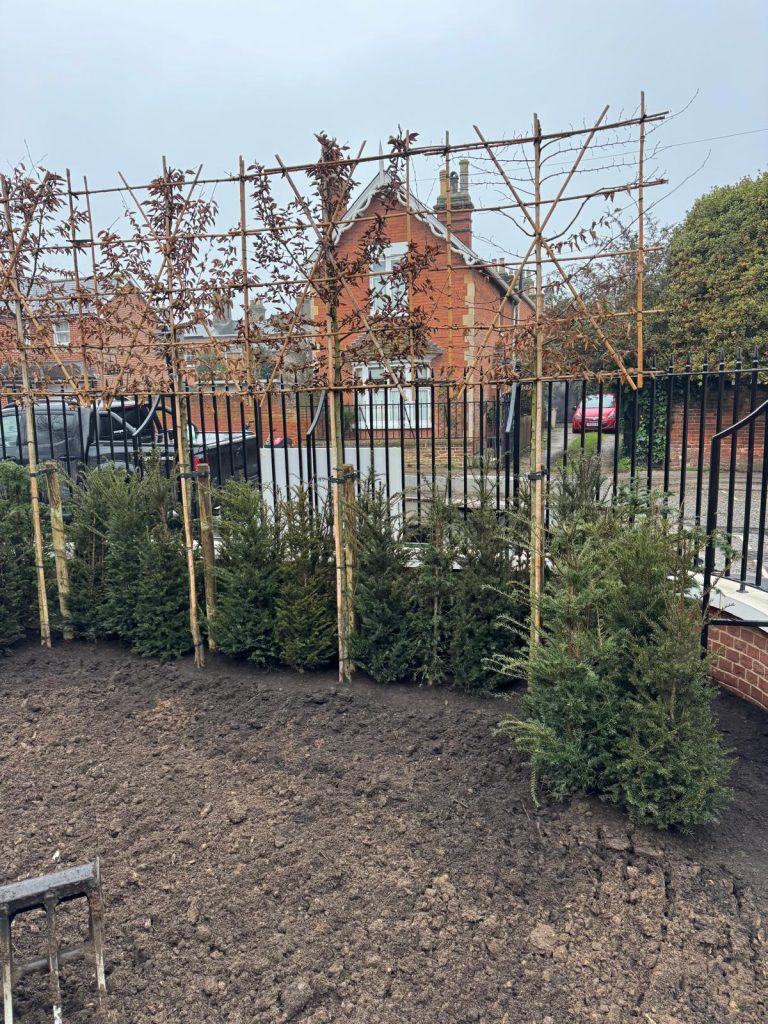
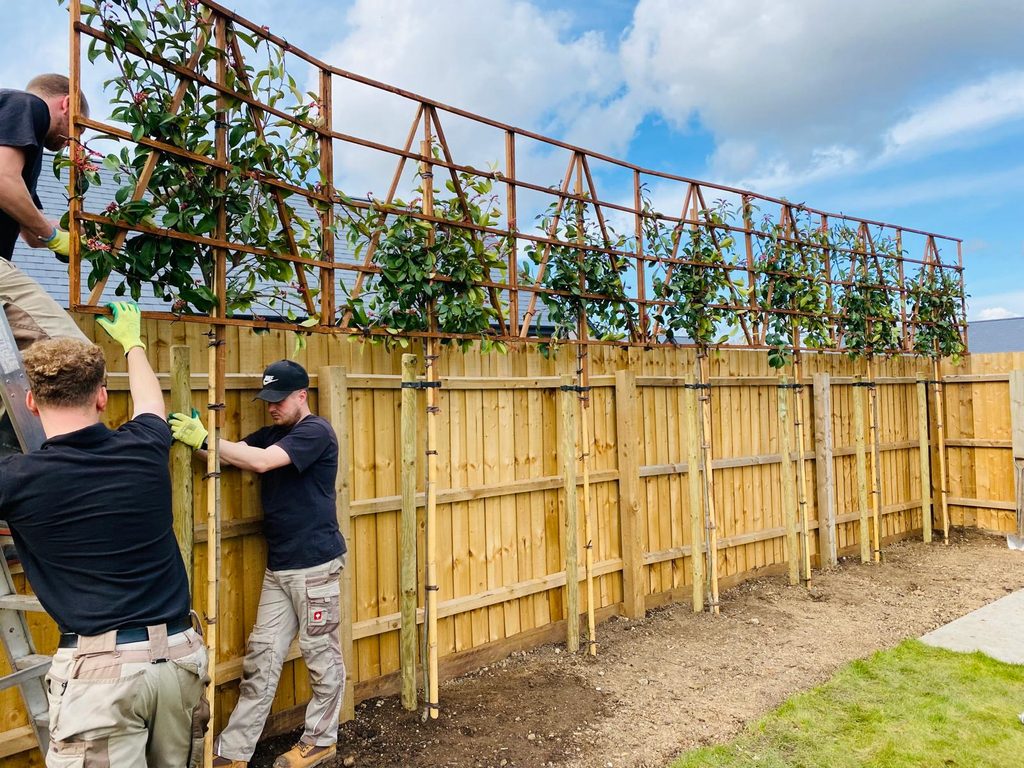
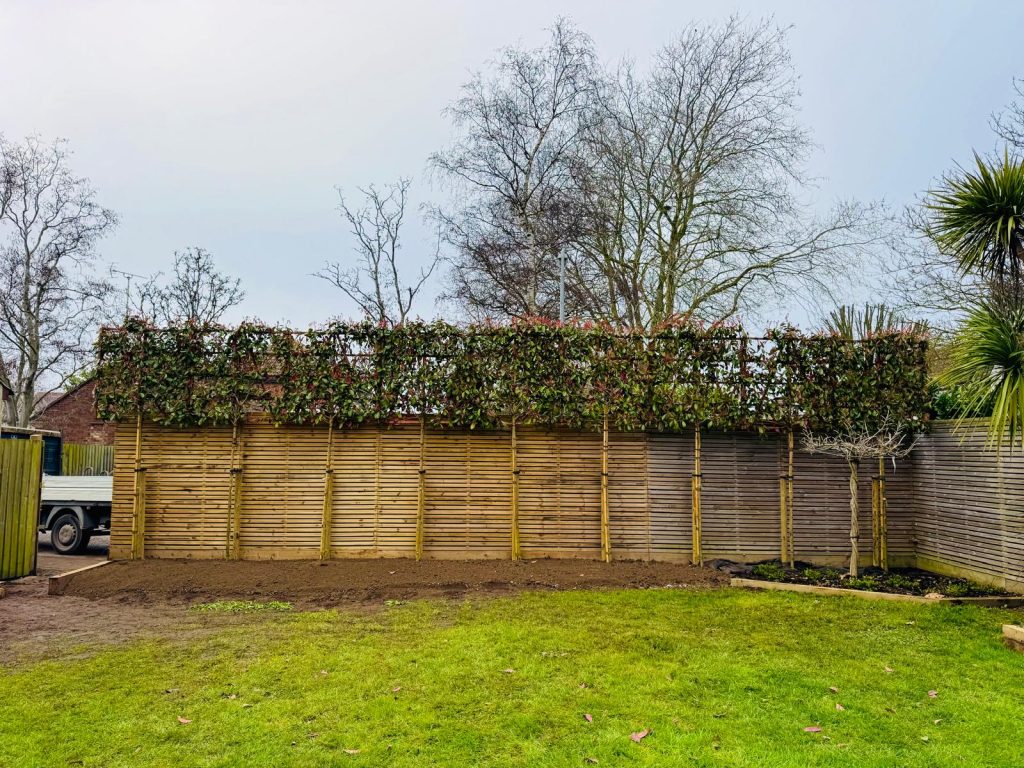
If a gap needs closing straight away, framed plants are trained flat on a frame, so they arrive as an instant section of screen. Pleached trees, with a clear trunk and a flat canopy on top, add privacy above a fence or wall without taking up space at ground level. Pleached hornbeam gives a crisp, formal line that turns golden in autumn, pleached Photinia Red Robin brings bright red new growth in spring, and pleached cherry laurel gives glossy evergreen cover all year. Our framed range also includes Photinia Pink Marble, Elaeagnus and jasmine.
Winter is also a good time to replant tired borders or create new ones, particularly in larger gardens where a border can carry a lot of the design. We choose plants for the conditions in your garden and for interest through the year, including structure and colour in the colder months. Our blog Clever Choices for 2027 Planting looks at the plants that coped best with this summer.
Most of the care comes in spring and early summer. New hedges and borders need regular watering through their first dry spells while the roots grow out, and a layer of bark mulch helps keep moisture in and weeds down. We will talk you through aftercare when we plant, and can include it in a maintenance plan if you would rather we looked after it.
Our autumn lawn renovation slots are now fully booked. If your lawn still needs help, we are taking bookings for spring renovations in March and April, and these are allocated on a first come basis, so reserving early is the best way to be sure of a slot.
Call 01473 846164 (Suffolk) or 01206 392813 (Essex), email info@greengrassltd.com.

If you’re planning your garden structure, November is perfect for planting classic options like:
These varieties thrive when planted during the dormant months and will put down strong roots before the spring growth kicks in. Whether for privacy, shade, or a splash of colour through the year, the right plants now set the stage for a beautiful landscape in every season.
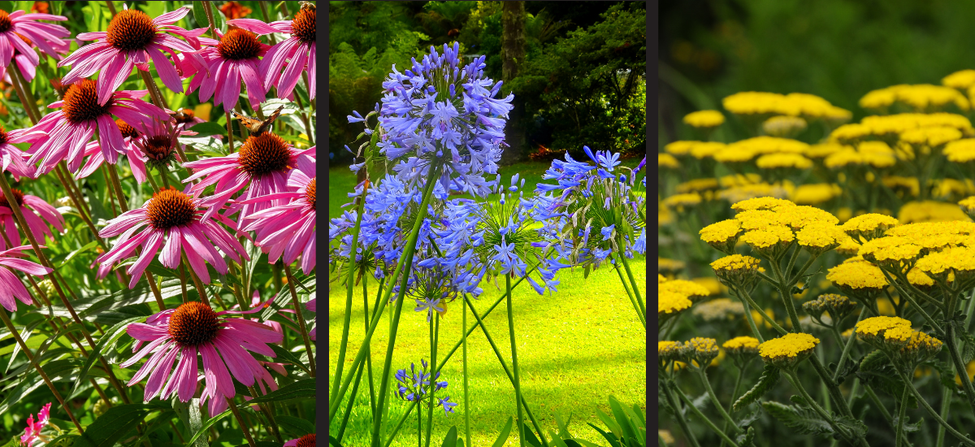
This summer has tested every garden in Essex and Suffolk, ours included. The sensible approach now is to plan a garden that can…
Read More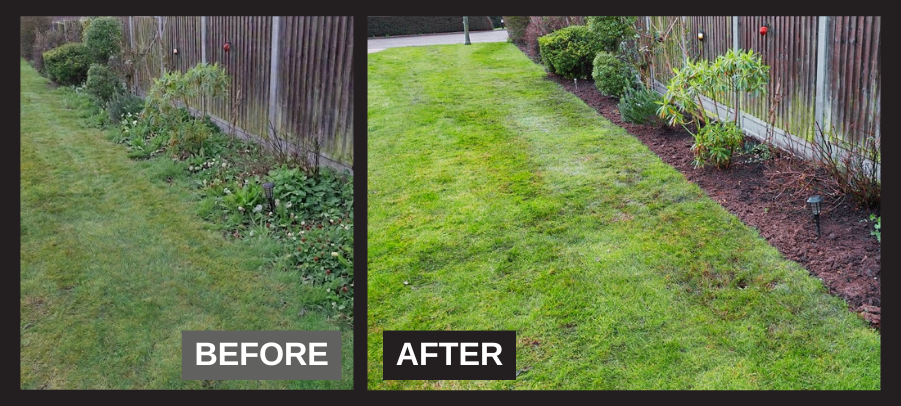
After a long winter, March marks the moment when soil temperatures begin to climb, growth stirs and outdoor spaces start to reveal the full…
Read More
After nearly two decades working with developers, property managers and contractors across Essex and Suffolk, I’ve learned that the successful projects are the ones…
Read More