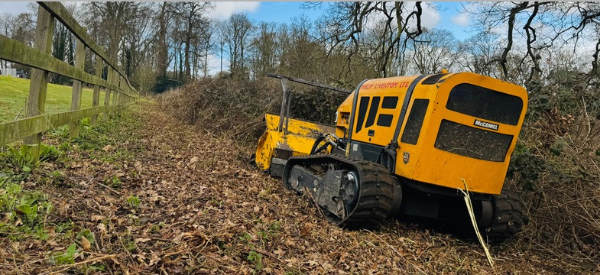

This summer was hard on planted grounds across Suffolk and north Essex. On many commercial sites the damage is now easy to see: gaps in boundary hedges where whole sections have died back, beds that are thin or bare, and corners that were left alone while nothing was growing and have since become overgrown.
For a care home, a business park or a country estate, the grounds are the first thing residents, visitors and clients see. Winter is the right time to put them back in order, and the work done over the next few months will decide how the site looks next spring and summer.
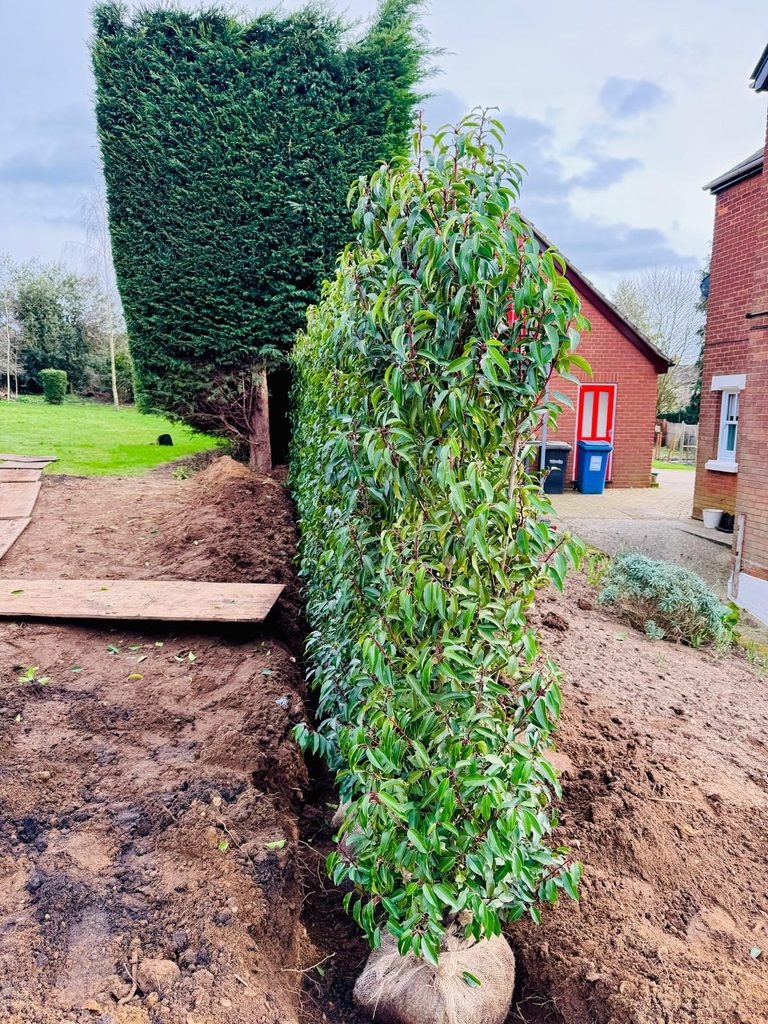
As growth slows from late autumn, hedging and shrubs can be planted as root ball and bare root stock. These plants are lifted and planted while they are dormant, and our root ball planting season runs from November to March. They go into cool, moist soil and spend the winter settling their roots before spring growth begins. A replacement hedge or a replenished bed planted now has the best chance of establishing before next summer, which matters more than ever after a year like this one.
Winter is also the usual time for major work on boundary and screening hedges, because nesting birds are protected through spring and summer. We avoid hedge cutting during the nesting season, so winter is when we plan cutting back, reshaping and removal.
Hedges do a lot of work on a commercial site. They mark boundaries, screen car parks and service areas, and frame entrances. When a section dies, the gap draws the eye straight to it. We start by assessing what can be saved. Dead sections and their roots are removed, the ground is prepared, and replacement stock is planted to match the existing hedge as closely as possible. Root ball plants suit evergreen hedging where you need height and screening quickly, and bare root stock suits longer runs and native mixes. Hornbeam is one of our most popular choices for commercial boundaries. It is a native hedge that copes well with heavier soils, clips into a crisp formal line, and often holds its brown leaves through the winter, so it keeps screening when many other deciduous hedges are bare. Our hedging range includes Portuguese laurel, cherry laurel, Griselinia and Euonymus Green Spire, with Portuguese laurel available in sizes up to 180 to 200cm. Where hedges have survived but grown out of shape, winter is also a good time to cut them back and reshape them.
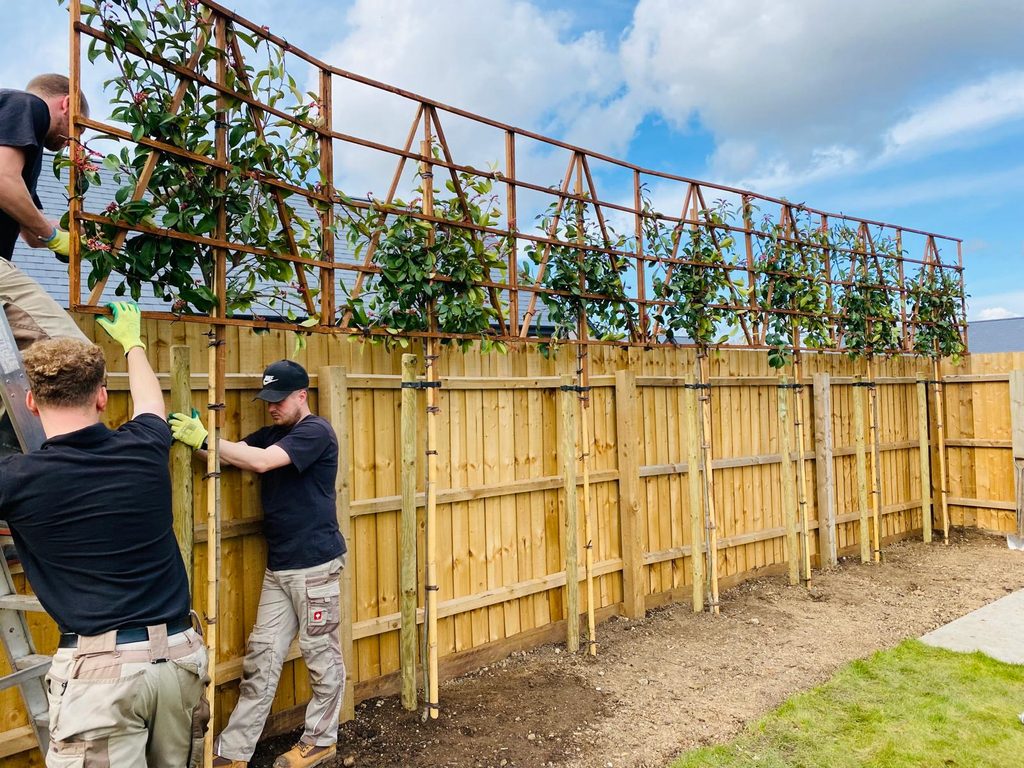
Where a gap needs closing straight away, or a car park, bin store or neighbouring building needs screening, framed plants give an instant result. They are grown and trained flat on a frame, so they arrive as a ready-made section of screen. Our framed range includes Photinia Pink Marble, Elaeagnus and jasmine, in sizes such as 120 x 100cm and 140 x 100cm. For screening at height, we supply pleached hornbeam, pleached Photinia Red Robin and pleached cherry laurel. Pleached hornbeam lines are a classic choice for formal frontages, drives and estate approaches. Pleached trees, with a clear trunk and a flat canopy on top, create screening above head height while keeping the ground beneath open, which suits boundaries above low walls and fences and planting along frontages.
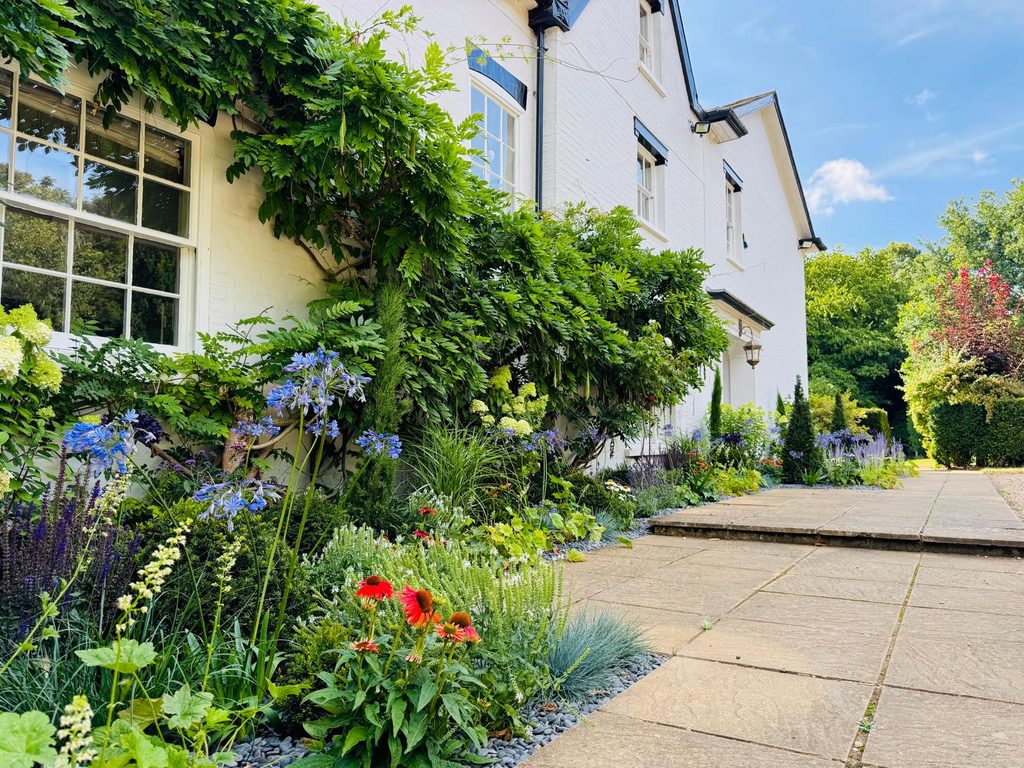
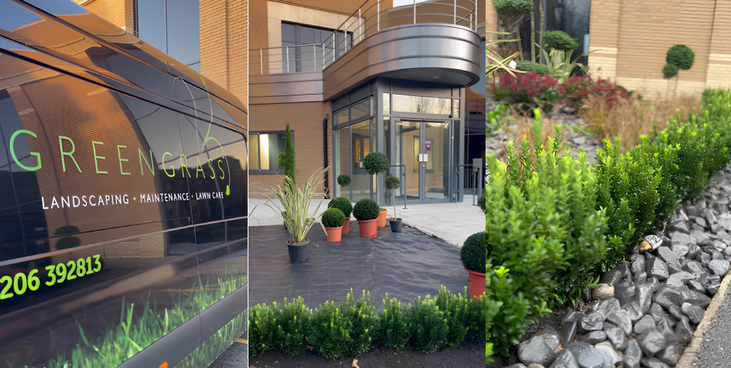
Beds by entrances, reception areas and residents’ gardens are where planting is seen most closely. After the drought, many need replanting rather than tidying. We replenish beds with plants chosen for structure and colour through the colder months, such as Skimmia japonica, ornamental grasses and clipped evergreens and hornbeam, and finish with fresh bark to suppress weeds and hold moisture. Our office entrance project earlier this year shows what a planned scheme can do for a building: architectural topiary for year-round shape, with underplanting for texture and seasonal colour.
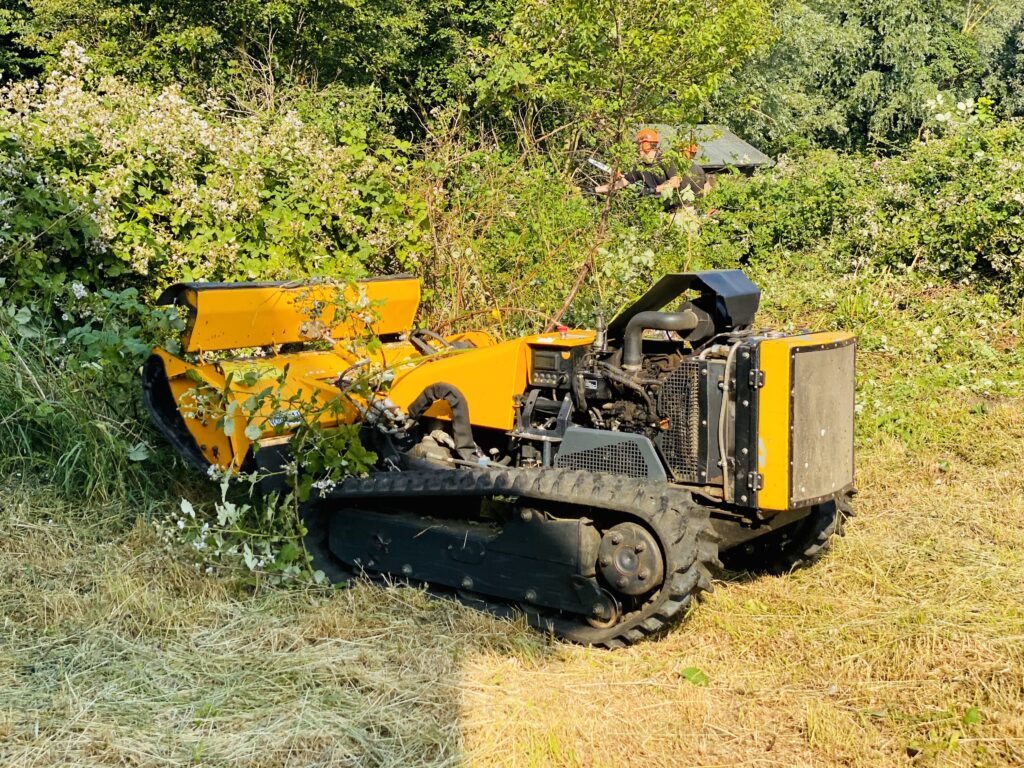
Every site has areas that slip out of sight: banks, boundaries, back corners and land behind units. Once they become overgrown, they make the whole site look neglected. We strip these areas back, clear the arisings and remove the waste, then agree what comes next, whether that is replanting, turfing or bringing the area into a regular maintenance schedule so it stays under control.
Winter grounds care is about more than planting. Leaf clearance keeps paths, car parks and entrances tidy and safer underfoot, which matters on sites with residents, staff and visitors coming and going. Removing dead and drought-killed plants stops beds looking neglected and makes room for replanting. Weeding, together with targeted chemical weed control on paths, hard standing and beds, keeps the site looking cared for through the quieter months. Chemical application is carried out by trained, certificated operators.
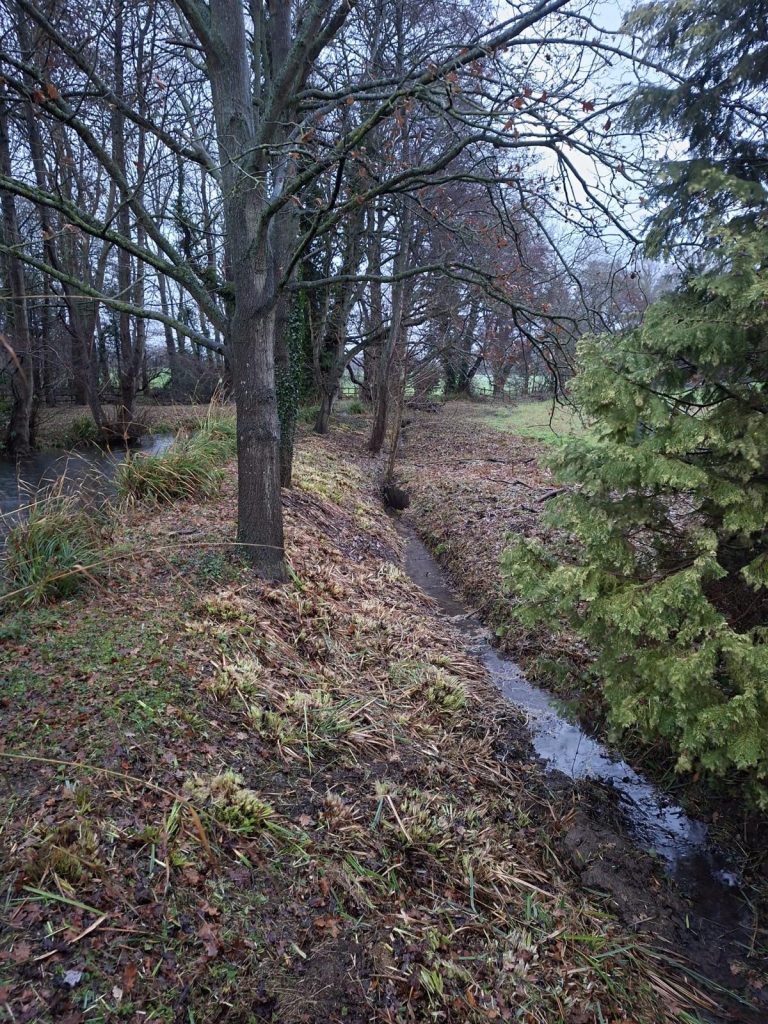
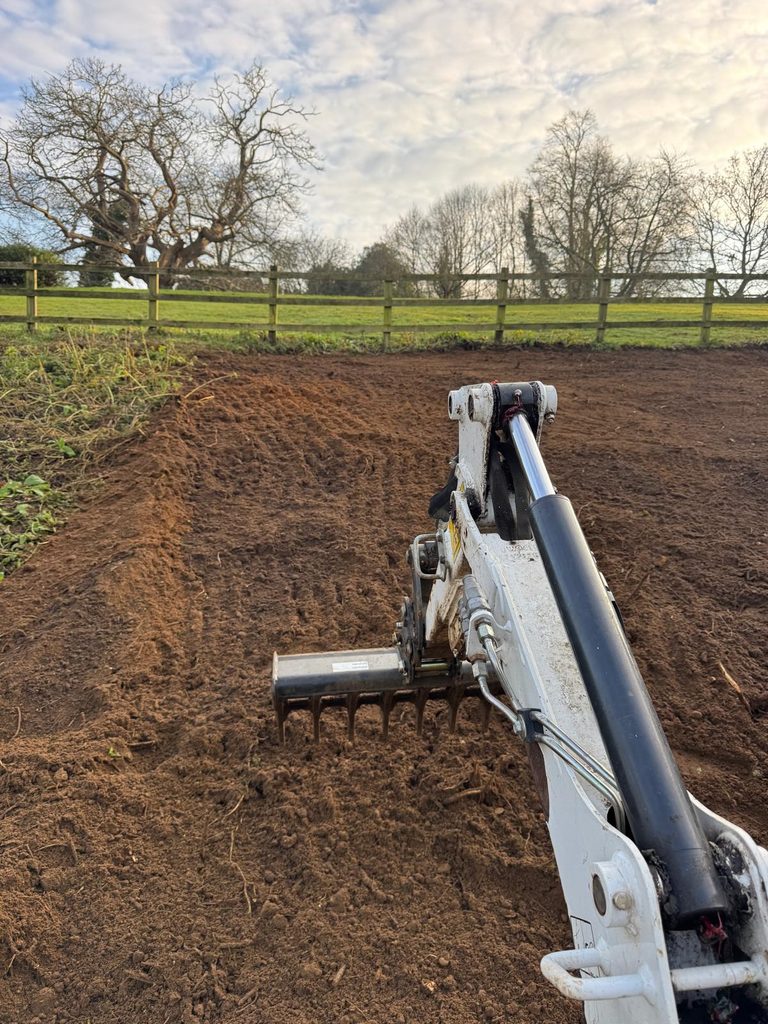
Some of our clients sit between residential and commercial. Their grounds are private, but run on an estate scale. At a private hall near Woodbridge in Suffolk, our team provides regular maintenance throughout the year, including grass cutting, quarterly lawn treatments, scarification, aeration and hedge cutting. Alongside this, we take on one-off projects as the grounds need them. This winter, that means tackling large, established beds that have become overgrown. We are digging them out completely and taking them back to bare soil, ready to review and replant with a scheme that suits the space for years to come. Grounds of this size need a team that can plan the work in stages, bring the right equipment and keep the site looking cared for throughout.
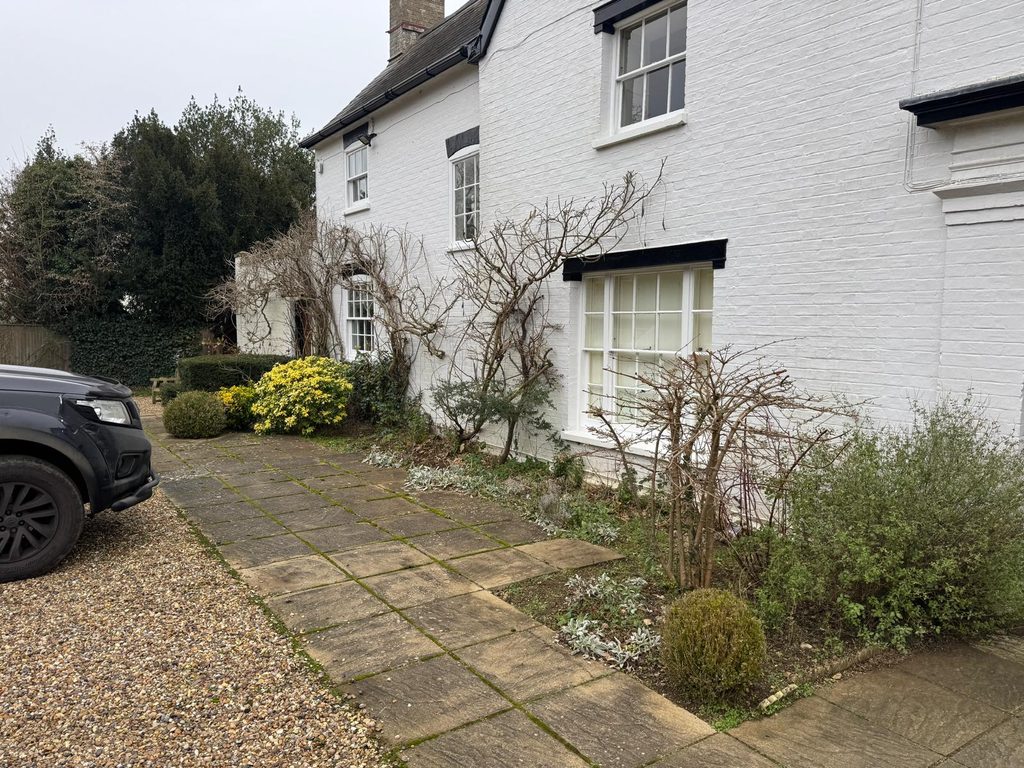

Hedge replacement, bed replenishment, clearance and winter maintenance on a commercial scale are jobs for a team, not a single gardener. Our uniformed crews work in teams of two or more, source and supply the plants, remove the waste, and can carry straight on with regular maintenance so the new planting is looked after once it is in. We are members of the Association of Professional Landscapers and hold full insurance for commercial work.
We work with care homes and hospices, industrial estates and business parks, offices and commercial premises, and halls and country estates across Suffolk and north Essex, from our bases at Claydon and Brantham. We plan work around your residents, staff and visitors, and can stage it so the site keeps running normally.
Our winter diary is filling now. If your hedges, beds or boundaries took a hit this summer, the sooner we visit, the sooner we can plan the work into the planting season.
First impressions happen fast. A prospect pulling into your car park, a customer arriving for a meeting, a new recruit turning up for interview:…
Read More